
Libro.fm Audiobooks
Libro.fmBooks & Reference
4.91.66K Reviews
- Version
- 7.38.2
- Installs
- 100.00K
- Age Rating
- Everyone
Screenshots
Our Review of Libro.fm Audiobooks
 Analysis by Appyee
Listening to a book on a phone is easy; deciding which audiobook app deserves access to your attention, account, and payment details is more complicated. I spent time with Libro.fm Audiobooks as a Books & Reference app, paying particular attention to the choices it puts in front of the listener and to the moments where a user should slow down before tapping. My overall impression is positive, especially for readers who want to purchase audiobooks through a local bookstore rather than treating every audiobook service as an interchangeable streaming catalog.
The app is free to install, and its store presence is strong: it carries a 4.9 average from around 6,400 ratings, with more than 100,000 installs. Those figures suggest a well-received product, but they do not remove the need to judge the experience for yourself. The developer is Libro.fm, the content rating is Everyone, and the app supports Android 7.0 and later. I reviewed it as a practical buying and listening tool, not simply as a storefront.
Trust starts with what the app asks me to do
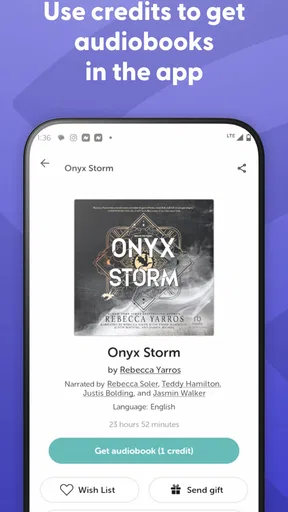
The first important distinction is that Libro.fm is built around purchasing audiobooks, not merely opening an unlimited listening shelf. That changes the trust relationship. When I use a streaming-first alternative, I am mainly deciding whether the monthly access model suits me. Here, I am also deciding whether I am comfortable selecting titles, completing purchases, and keeping those purchases connected to an account I expect to use over time.
That model can feel more deliberate. I am less likely to add a title casually just because it happens to be visible in a temporary recommendation row. A purchase encourages me to think about whether I genuinely want the book, whether I will listen soon, and whether it belongs in my long-term library. For readers who prefer owning access to individual audiobooks instead of relying entirely on a rotating subscription catalog, that is a meaningful difference.
At the same time, the app is not the best fit for someone who wants to sample dozens of books without thinking about individual purchases. A library app may be better for borrowing, while a subscription service may suit listeners who finish several books every month and prefer predictable recurring access. Libro.fm makes more sense when the act of buying a title matters to you, particularly when your purchase is connected to a local bookstore choice.
I would also separate the free app from the cost of the books inside it. Installation costs nothing, but the app is designed for audiobook purchases, so “free” should not be read as “everything can be listened to without payment.” That is an easy point to miss when comparing it with ad-supported audio apps or public-library services. I recommend deciding first whether you want a purchase-based audiobook library, then judging the app on how well it supports that decision.
What the local-bookstore angle changes
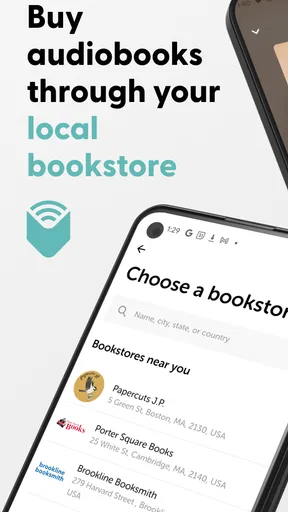
The most distinctive part of the experience is the connection between audiobook buying and a local bookstore. This is not just a decorative theme around a standard player. It gives the purchase a different meaning: I am choosing an audiobook while also considering where that purchase is directed. For readers who already support an independent bookstore, this can make the app feel more aligned with their everyday values than a completely anonymous digital marketplace.
That advantage is personal rather than universal. Someone who only wants the lowest-friction route to a title may not care about the bookstore relationship. Someone who wants every book in one ecosystem may also prefer a platform tied to a broader device or subscription library. I found the local connection most persuasive when I already knew which book I wanted and wanted the purchase to feel more intentional.
A useful habit is to browse with two questions in mind: “Do I want this audiobook?” and “Do I want to buy it through this particular channel?” Keeping those questions separate prevents the bookstore message from making a weak title seem more appealing than it really is. The app can support a value-based purchase, but it should not replace ordinary judgment about narration, length, subject, or whether audio is the right format for that book.
Account decisions deserve attention
Any app that combines a personal library with purchases deserves careful account handling. I would use an email address I check regularly, choose a unique password if the service asks me to create one, and avoid treating the phone as the only place where my library exists. If I change devices, lose access to the handset, or reinstall the app, the account is the part I expect to reconnect me with my purchases.
I also recommend reading each sign-in and checkout screen instead of moving through it automatically. The useful question is not only whether the app opens quickly, but whether I understand which account is active, what I am buying, and which bookstore choice applies. A fast purchase is convenient; a clearly understood purchase is safer.
The app’s current version is 7.38.2, which tells me that it has continued to receive product updates rather than remaining frozen as an old reader utility. I still would not assume that an update changes every account or privacy behavior in the same way. After a major update, I would briefly revisit the account area and purchase history, especially if I rely on the app for a substantial library.
Verified controls, visible choices, and moments that need care
Trust is easiest to evaluate when an app makes its choices visible. In Libro.fm, the important user-controlled moments are the ones around browsing, selecting a title, choosing a bookstore, signing in, and confirming a purchase. I prefer to make those decisions while fully awake and on a stable connection, rather than buying from a notification or from a hurried commute.
I would also keep the phone’s operating system and the app itself reasonably current. The minimum operating-system requirement is Android 7.0, so the app is available to a broad range of devices, but compatibility is not the same as a guarantee of an identical experience on every handset. Older phones may have less comfortable storage, slower downloads, or more interruptions from battery-saving settings.
One practical control is deciding where listening happens. If I am preparing for a flight, a long drive as a passenger, or a place with unreliable reception, I would arrange the audiobook beforehand and verify that it is available for offline listening before leaving. I would not wait until the last minute. This is a small workflow change, but it prevents a purchase from becoming useless at the exact moment I need it.
Another is separating listening from purchasing. I like to browse when I have time, add possibilities to my mental shortlist, and complete a purchase only after checking the title and edition. That habit is especially useful for books with similar names, sequels, abridged and unabridged versions, or multiple narrators. A clean reading routine is not only about playback; it begins with selecting the correct item.
Data-sensitive moments are usually ordinary moments
The most sensitive parts of using a book app are rarely dramatic. They are ordinary actions: creating an account, searching for a topic that reveals something personal, opening recommendations, entering payment information, or leaving the app signed in on a shared device. I treat those moments as separate decisions rather than assuming that installing a reading app makes every later action equally private.
Search behavior can reveal more than a purchase. A person may look for books about grief, health, relationships, religion, finances, or a private hobby without wanting that interest to become obvious to somebody else using the same phone. On a shared device, I would use a separate device profile or sign out when appropriate. I would also avoid handing my unlocked phone to someone while the app is open on a personal library or search screen.
Payment is another point where patience helps. Before confirming, I would check the title, author, narrator, and any bookstore selection displayed in the purchase flow. I would not rely on memory if I had been comparing several editions. The app’s purpose makes purchasing central, so the best protection is an attentive user who confirms the exact transaction rather than tapping through automatically.
Notifications can be useful for reminders or account activity, but they can also expose reading habits on a lock screen. I would review the phone’s notification settings and choose how much text is shown publicly. That is a device-level choice, yet it matters because a private audiobook interest can become visible through a notification preview even when the app itself is locked.
I do not treat a high rating as proof that an app is harmless in every privacy situation. Ratings mainly tell me that many people enjoy the product overall. Libro.fm’s 1.7 thousand reviews and high average are encouraging signs of user satisfaction, but I still make my own decisions about account sharing, payment, notifications, and device access.
How I would use it in a normal week
Imagine that I am commuting several days a week and want one nonfiction audiobook for the journey. On the weekend, I would browse calmly, compare the title details, and decide whether buying it through a local bookstore fits my priorities. After signing in, I would confirm the account and purchase information, then prepare the book for listening before Monday morning.
On the commute, I would use headphones and keep the phone’s battery situation in mind. If the journey includes areas with poor reception, I would rely on a previously prepared listening copy rather than assuming the train or bus will provide a reliable connection. When I finish, I would avoid buying the next recommendation immediately. I would first decide whether I want another title, a different genre, or a break from audiobooks altogether.
This workflow shows where the app is strongest: it supports a considered audiobook purchase and then becomes part of a repeat listening habit. It is less compelling if my routine is built around borrowing a book for free, switching rapidly between many titles, or consuming whatever a subscription happens to include. The right choice depends on whether ownership and bookstore support are central to my listening life.
Where it compares well, and where alternatives win
Compared with a general music-and-podcast app, Libro.fm feels more focused. The experience is organized around audiobooks rather than asking them to share space with songs, short episodes, and unrelated audio. That focus can make a dedicated book listener feel less distracted. The trade-off is that I would not choose it as my only audio app if my main routine combines music, podcasts, radio, and books in one queue.
Compared with a library-borrowing app, it offers a different kind of control. Buying a title means I am not waiting for a copy to become available or worrying about a lending period in the same way. However, borrowing is often the better financial choice for a reader who listens once and rarely returns to the same book. I would use the library route for experimentation and Libro.fm for books I genuinely want to keep in my personal listening collection.
Compared with a subscription audiobook service, the purchase model can be easier to understand for occasional listeners. I am not paying for a month in which I barely listen. On the other hand, frequent listeners may find that a subscription gives them more flexibility per month, depending on the titles they choose and the terms of that service. Libro.fm is therefore strongest for intentional selection, not necessarily for maximizing the number of books sampled.
There is also a psychological trade-off. A local-bookstore purchase can feel more meaningful than an anonymous digital transaction, but that feeling should not push me beyond my budget. I would still compare the audiobook with borrowing, waiting, buying a print edition, or simply listening to something I already own. Supporting a bookstore is a valid reason to choose the app, not a reason to stop making sensible purchasing decisions.
Small habits that make the experience better
- Check the exact edition before buying. Similar titles can be easy to confuse, so I verify the author, narrator, and series position instead of relying only on the cover image.
- Prepare travel listening early. I arrange the book before leaving reliable internet access and test the listening setup rather than discovering a download or playback problem on the road.
- Protect the library on shared devices. I review lock-screen notifications and sign out or use a separate profile when another person regularly uses the phone.
- Use the purchase model intentionally. I reserve purchases for books I expect to finish or revisit, while using library borrowing or another service for low-commitment sampling.
- Review the active account before checkout. This is especially important if family members share a device or if I have more than one email address.
These habits are not glamorous, but they are where much of the real value comes from. An audiobook app can have a pleasant interface and still create avoidable frustration if I buy the wrong edition, leave a personal title exposed in a notification, or wait until a trip begins to prepare listening. Libro.fm rewards a little planning.
Who should choose it, and who should skip it
I would recommend Libro.fm to readers who buy audiobooks deliberately, care about directing purchases through a local bookstore, and want a dedicated place for spoken books. It is also a good candidate for someone who listens often enough to appreciate a focused audiobook library but not necessarily enough to justify a recurring subscription elsewhere.
I would be more cautious about recommending it to a person whose priority is the lowest possible cost per book. That listener should compare local-library borrowing and other access models before purchasing. I would also steer a heavy sampler toward a service that makes broad exploration easier, particularly if they regularly start books without finishing them.
Parents and families should remember that the Everyone rating describes the app’s general age suitability, not a promise that every audiobook topic will suit every child. I would choose titles with the listener’s maturity and interests in mind, and I would not hand over a purchase-enabled account without discussing how buying decisions work.
For older Android phones, the minimum requirement is reassuringly broad, but I would still check practical issues such as available storage, battery health, headphone compatibility, and the phone’s background-data restrictions. If the device aggressively closes apps, interrupts downloads, or has very little free space, the problem may be the handset rather than the audiobook catalog.
My cautious verdict
After using it as a buying and listening companion, I see Libro.fm as a focused choice for people who want their audiobook purchases to support a local bookstore. Its strongest quality is not that it tries to be every kind of audio service. It has a clearer identity: find a book, make a considered purchase, and build an audiobook library around that choice.
The limitations are equally clear. The free installation should not be confused with free access to every audiobook, and the purchase-based approach will not suit everyone. Readers who borrow most books, want an unlimited-feeling subscription, or prefer to keep all media in one general-purpose app may be happier elsewhere. I also think users should take ordinary care with account access, checkout confirmation, search privacy, and lock-screen notifications.
The app has been available since June 27, 2016, and its current version is 7.38.2. That gives it the feel of an established product rather than a brand-new experiment, while the broad Android support makes it approachable for many users. Still, the decision should come down to values and habits, not age or popularity alone.
My recommendation is simple: choose it if buying audiobooks through a local bookstore is important to you and you want a dedicated listening experience. Try a library or subscription alternative first if your main goal is to sample widely at the lowest ongoing cost. For the right listener, Libro.fm Audiobooks turns a routine digital purchase into a more intentional way to build a personal listening library, provided I remain attentive at the moments where account, payment, and privacy choices matter.
Verdict
Strengths of Libro.fm Audiobooks
- Supports independent bookstores with every audiobook purchase.
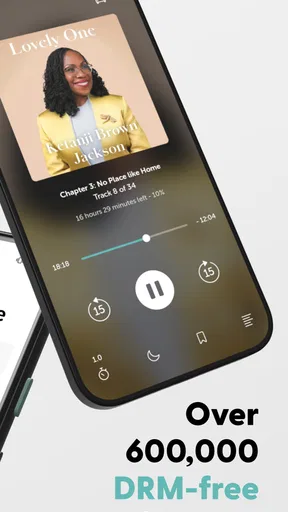
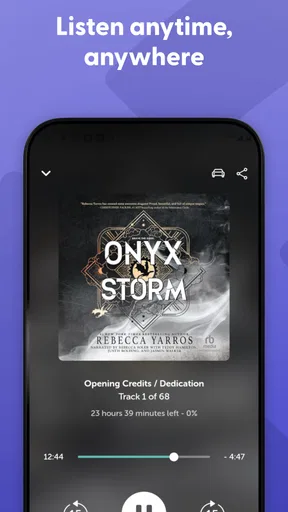
- Offers DRM-free downloads for listening without an internet connection.
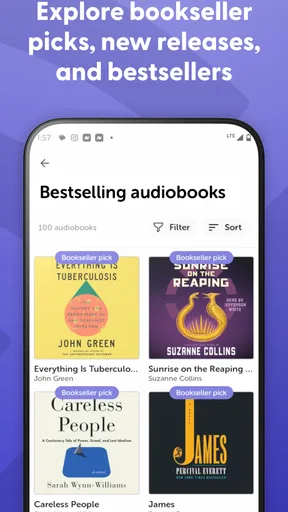
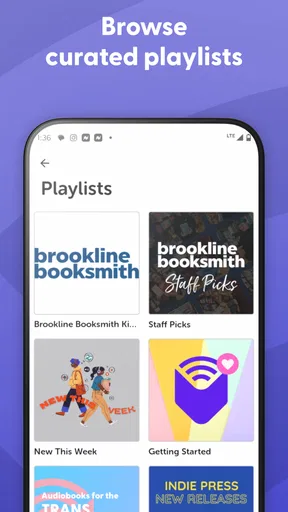
- Includes curated recommendations and lists from booksellers.
- Lets you switch between listening speeds for easier comprehension.
- Works with Apple CarPlay and Android Auto for safer in-car listening.
Limitations of Libro.fm Audiobooks
- The catalog may be smaller than those of major audiobook competitors.
- Membership credits can expire if they are not used within the allowed period.
- Some popular titles may cost more without a membership discount.
- Regional availability and catalog selection vary by country.
- Limited platform support may inconvenience users on certain devices.
Similar Picks in This Category
View All
Google Play Books & Audiobooks
Google LLC4.7

네이버 - NAVER
NAVER Corp.3.5

Wattpad - Read & Write Stories
Wattpad.com3.7

King James Bible - Verse+Audio
Ozion4.8

Bible Offline-KJV Holy Bible
Bíblia Offline4.9

Amazon Kindle: Reading App
Amazon Mobile LLC4.8
Frequently Asked Questions
What is Libro.fm Audiobooks, and how does it work?
Libro.fm is an audiobook platform that lets you browse, purchase, download, and listen to audiobooks through its mobile app or website. After creating an account, you can buy individual titles or join a monthly membership plan that includes audiobook credits and member discounts. Purchased books remain available in your Libro.fm library, so you can listen whenever you want on supported devices.
Does Libro.fm support independent bookstores?
Yes. One of Libro.fm’s main differences from many audiobook services is its partnership with independent bookstores. When you sign up or make purchases, you can choose a participating local bookstore to support. A portion of your purchase or membership revenue goes toward that bookstore, making the service appealing to listeners who want their audiobook spending to benefit independent booksellers.
Is a Libro.fm membership required to listen to audiobooks?
No, a membership is not required. You can create an account and purchase individual audiobooks whenever you choose. However, the monthly membership may be useful for frequent listeners because it generally includes a credit for an audiobook, member pricing, and other benefits. Before subscribing, check the current plan details, pricing, renewal terms, and credit policies in your region.
Can I listen to Libro.fm audiobooks offline?
Yes. After purchasing an audiobook, you can download it to the Libro.fm app for offline listening. This is convenient when traveling, commuting, or using a device without reliable mobile data. You normally need an internet connection to download the title first, and available storage space may vary depending on the audiobook’s length and your device settings.
Does Libro.fm work on both Android and iPhone?
Libro.fm provides mobile apps for Android and iOS, allowing users on both major smartphone platforms to access their audiobook libraries. The core listening features are similar, including playback controls, bookmarks, sleep timers, and offline downloads, although the exact interface can differ slightly between operating systems. Make sure your device meets the app’s current compatibility requirements before downloading.
